Vocational Education in CBSE Schools: What Kaushal Bodh Means in 2026-27
A 2026-27 guide to vocational education in CBSE schools, covering Kaushal Bodh, practical projects, Class IX skill education, assessment, and parent questions.
For decades, many Indian families have heard the same hierarchy: academic subjects belong at the centre of school, while making, repairing, growing, designing, or working with tools belongs at the edge. That hierarchy is educationally weak. Practical work can demand mathematics, scientific judgement, communication, patience, safety, teamwork, and the humility to revise a plan that fails.
CBSE’s 2026-27 skill education curriculum gives this area a more visible place. The Board lists Skill Education under Kaushal Bodh for Classes VI, VII, and VIII, and a mandatory Vocational Education subject under Kaushal Vikas for Class IX alongside a wide range of optional skill subjects. The important question for parents is not whether the timetable contains a new label. It is whether students actually encounter meaningful work.
Good vocational education is neither early job allocation nor a lesser route for children considered weak in conventional subjects. At school level, it should widen exposure, connect knowledge with action, build respect for skilled work, and help students discover capabilities that a written examination may not reveal.
Key takeaways
- CBSE’s 2026-27 curriculum lists Kaushal Bodh for Classes VI-VIII and mandatory Vocational Education for Class IX.
- Skill education should combine planning, safe practice, teamwork, documentation, reflection, and improvement.
- A finished model is less important than whether the student can explain decisions and learn from failure.
- Practical exposure should broaden future choices rather than force an early career identity.
- Parents should ask about access, trained supervision, assessment quality, local partnerships, and actual time on task.
What Kaushal Bodh changes in the middle years
Kaushal Bodh places skill education within Classes VI to VIII, an age when students are old enough to plan and handle structured responsibilities but young enough to explore without every activity becoming a career decision. Projects can draw from work with materials, services, people, local knowledge, technology, the natural world, and the built environment.
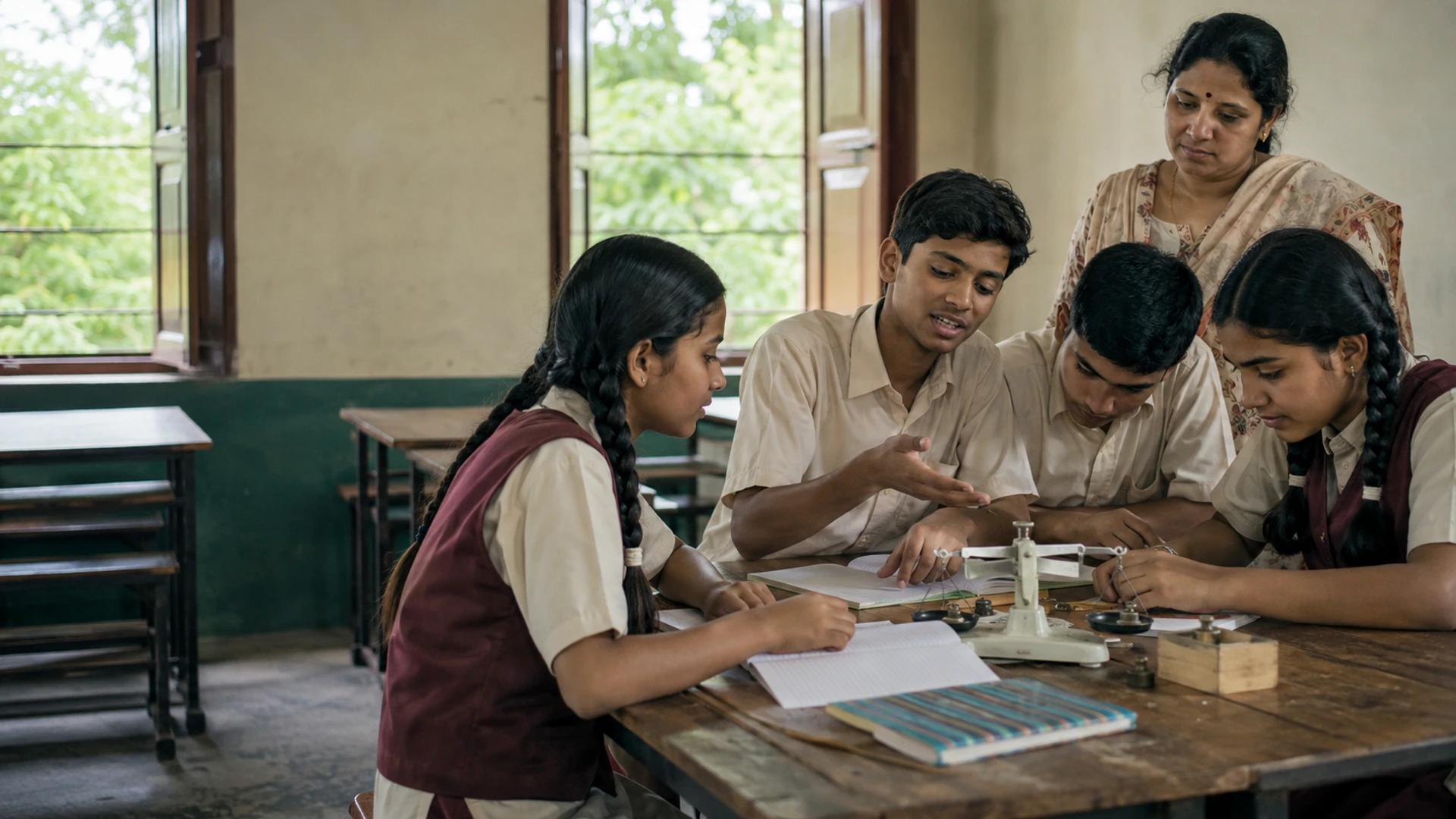
The educational value lies in the complete cycle. Students should understand a need, plan a response, select materials or methods, follow safety rules, divide responsibilities, make or perform something, test the result, document what happened, and reflect on what they would change. A teacher may introduce relevant science, mathematics, language, art, or social understanding along the way.
This is more demanding than arranging one annual exhibition. A display can be impressive while hiding how little the student did. Regular practical learning allows teachers to observe habits that cannot be inferred from the final object: persistence, accuracy, cooperation, care with tools, willingness to ask for help, and response to an unexpected result.
How Class IX and later choices fit in
For the 2026-27 session, CBSE’s published skill curriculum lists Vocational Education under Kaushal Vikas as a mandatory skill subject for Class IX. It also lists optional skill subjects across the secondary and senior secondary years, ranging from information technology and artificial intelligence to agriculture, tourism, healthcare, financial markets, design, electronics, media, and physical activity.
Availability at an individual school depends on staffing, infrastructure, timetable design, and the subjects the school is approved and prepared to offer. Families should therefore distinguish the national list from the actual school programme. A long menu on a Board website does not mean every campus can provide every course.
The best early exposure helps students make later choices with evidence. A child who has planned a garden task, built a circuit, organised a service activity, documented a local process, or solved a design problem has more information about their own interests than a child selecting subjects only from family expectations and marks.
Why school-level vocational education is not narrow job training
School is not expected to turn a thirteen-year-old into a finished technician. It can, however, teach respect for materials, safe habits, measurement, sequence, quality, cost, communication, and the relationship between knowledge and useful work. These are transferable capabilities even when a student later enters a very different field.
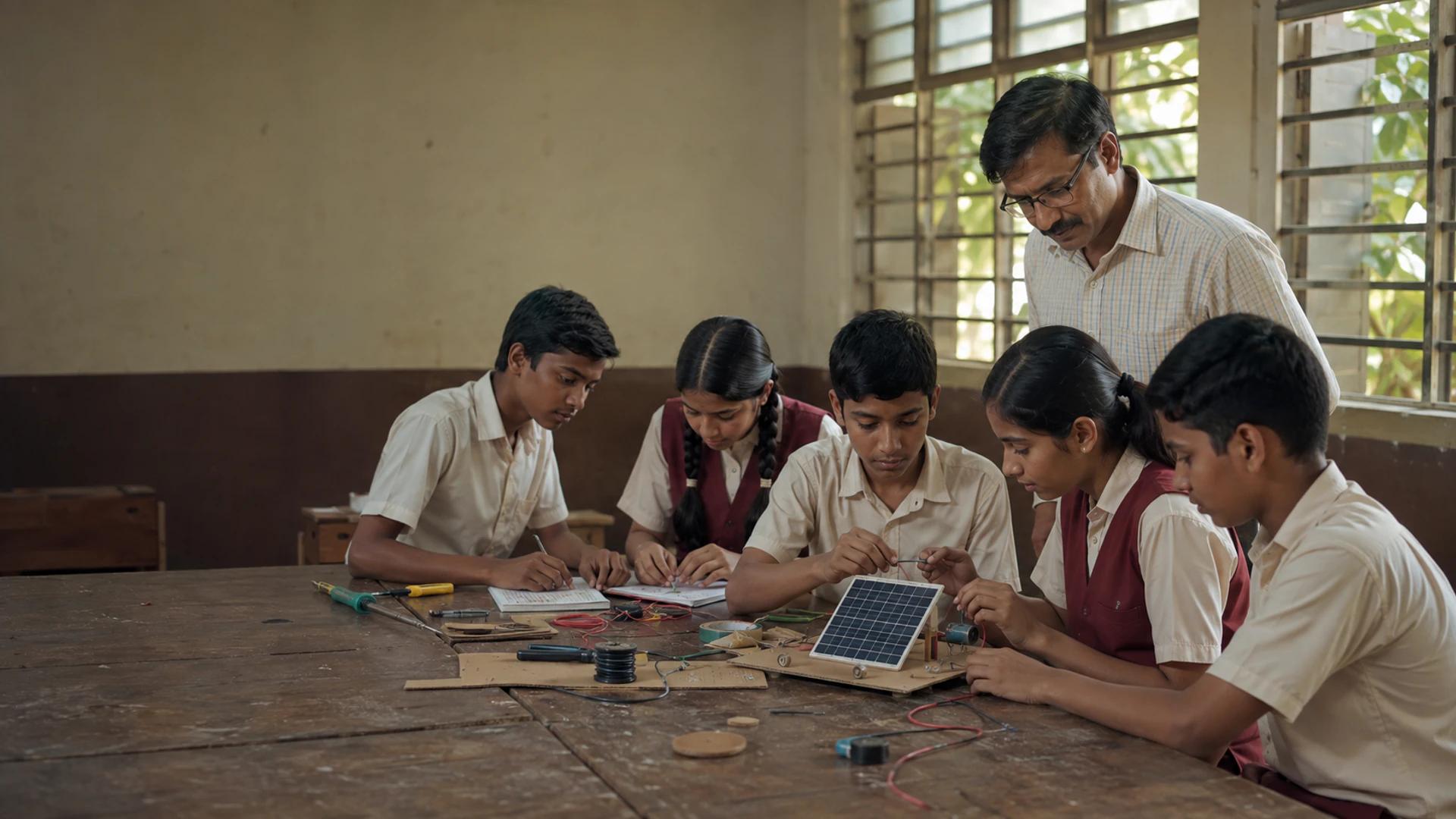
A practical task also reveals that intellectual and manual work are not opposites. Designing a stable structure requires reasoning. Growing plants requires observation and record-keeping. Planning a small event requires budgeting and communication. Debugging a circuit requires a hypothesis, a test, and attention to evidence. The hands may be active, but so is the mind.
This broader view protects students from premature sorting. Skill education should allow every student to participate, including those who already perform strongly in academic subjects. It should not become a separate, lower-status timetable for a selected group unless a later pathway is freely chosen and properly supported.
What a worthwhile practical project looks like
A good project has a real constraint. The model must carry a load, the survey must answer a useful question, the garden plan must suit local conditions, the service must work for an actual user, or the budget must stay within a limit. Constraints force students to make decisions and prevent the work from becoming decoration.
The project should be achievable with the school’s available time, tools, and supervision. Expensive kits are not automatically better. Cardboard, soil, measuring tools, simple circuits, local materials, and carefully chosen community problems can support serious learning. What matters is that students do the thinking and making themselves.
Failure needs a legitimate place. If every model works perfectly on the first attempt, the task may be too controlled or too heavily completed by adults. Teachers can assess the plan, safe working process, records, explanation, collaboration, and revision rather than awarding most marks to polish.
Assess skill without rewarding adult-made work
Practical assessment is vulnerable to the same problem as school projects everywhere: the neatest submission may reflect the most adult help. Schools can reduce this by observing work in class, requiring short individual explanations, keeping process notes, and asking students to demonstrate a step or respond to a changed condition.
A clear rubric can include planning, safe practice, use of tools or methods, problem-solving, teamwork, documentation, final function, and reflection. Not every student must be equally confident with each component. The point is to make the learning visible and give specific feedback on what to improve.
Parents can support without taking over. Help a child find a safe material or arrange a conversation with a knowledgeable person, but leave design decisions and construction with the student. A rough model accompanied by an honest explanation has more educational value than a perfect object the learner cannot describe.
Connect skill education with local India
India’s regions offer different materials, livelihoods, environmental questions, crafts, services, and technical practices. A school in Chhattisgarh can draw responsibly from agriculture, water, forests, food systems, local enterprise, building practices, public services, crafts, and repair cultures without romanticising work or using community members as display objects.
Local practitioners can make learning more truthful when partnerships are respectful, safe, and properly prepared. Students may observe a process, interview a worker, compare traditional and contemporary methods, or receive feedback on a design. The teacher remains responsible for linking the experience to learning goals and for ensuring that every student participates with dignity.
Local relevance does not limit national or global opportunity. It teaches students to notice how knowledge operates in a real place. The ability to study a context carefully, speak with people, work within constraints, and improve a solution travels well.
Questions parents should ask a school
The strongest evidence is found in the timetable, the workspaces, student notebooks, safety procedures, and the explanations students can give. Ask which projects are planned for each class, how much work happens during supervised school time, what tools and materials are available, and how teachers are prepared to guide them.
Also ask how the school avoids gender stereotypes. Cooking, electronics, financial literacy, agriculture, design, care work, and mechanical tasks should not be divided through old assumptions about who belongs where. Exploration is valuable precisely because it can widen a child’s sense of possibility.
Questions to ask
- Which Kaushal Bodh or vocational projects will students complete this year?
- How many hours involve genuine supervised practical work?
- Who is trained to supervise tools, materials, safety, and first aid?
- How is individual learning assessed within a group project?
- Which optional skill subjects does the school actually offer in Classes IX-XII?
- How are local experts or workplaces selected and safeguarded for student interaction?
- Can students explain a failed attempt and show how they improved it?
Sources and further reading
These sources were checked on 7 September 2026. Rules and circulars can change between academic sessions, so please confirm the latest version for your child’s year.
More about Radiant Public School
Explore academics
See the CBSE programme, laboratories, library, and learning support from Classes I to XII.
Read the AI and skills guide
Understand computational thinking, AI literacy, and the questions families should ask about future-ready learning.
Visit the campus
Discuss current subjects, practical learning spaces, and the daily academic programme with the school.