
AI and Skill Education in CBSE 2026–27: A Parent’s Guide
What CBSE’s 2026–27 AI, computational-thinking, vocational, and skill curriculum means, and how parents can judge whether a school is implementing it well.
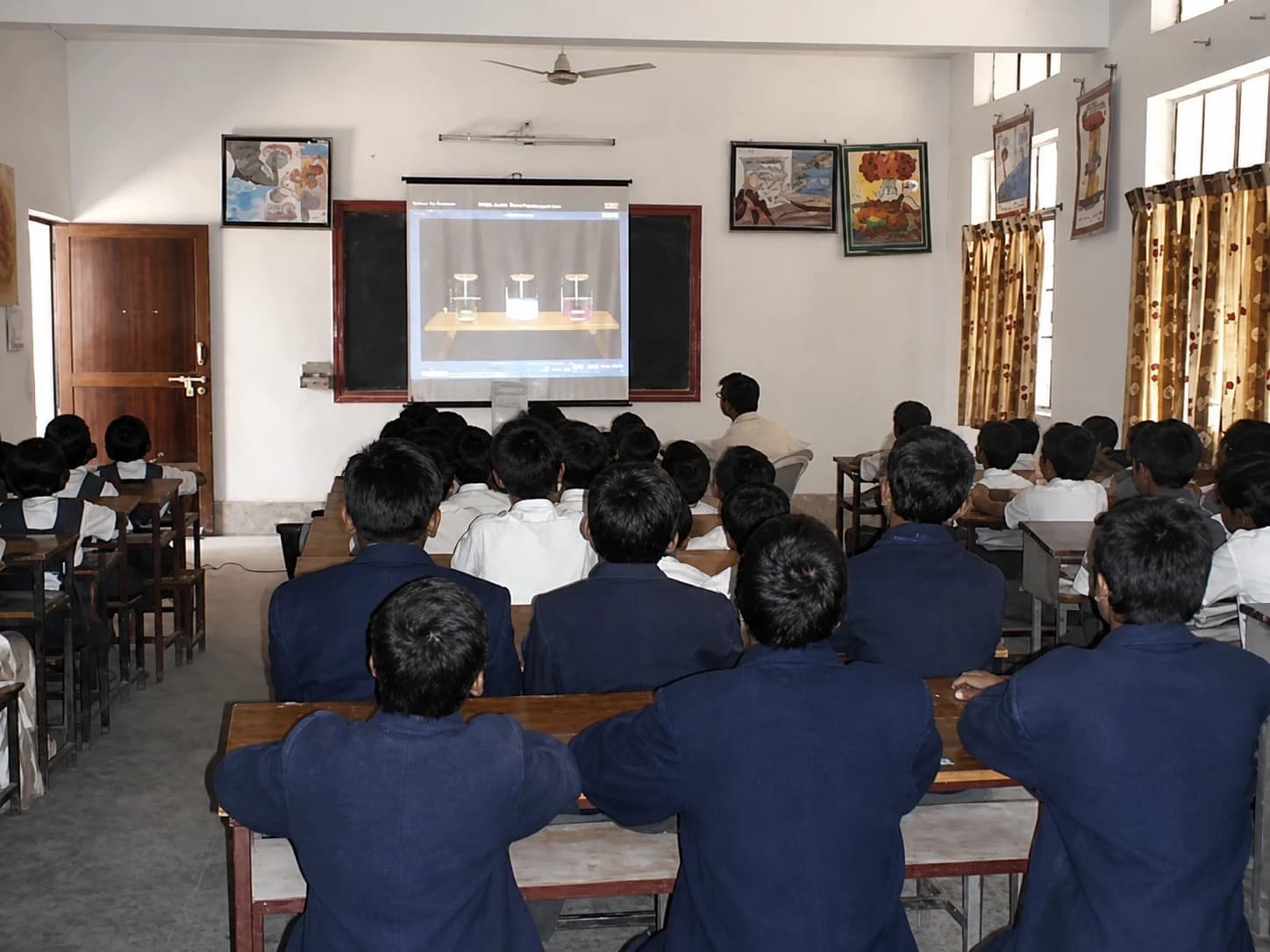
Artificial intelligence has moved from an optional school-club topic into India’s formal curriculum conversation. For 2026–27, CBSE has published a Computational Thinking and Artificial Intelligence framework for Classes III to VIII, a revised Class IX scheme of studies, and a wide catalogue of skill subjects for secondary and senior-secondary students.
That does not mean every child needs to become a programmer, or that a room of new computers proves a school is future-ready. The more useful parent question is whether students are learning to break down problems, work with data, test ideas, recognise bias, use digital tools responsibly, and connect knowledge with real tasks.
Key takeaways
- CBSE has released a CT and AI curriculum framework and student resources for Classes III–VIII for 2026–27.
- The 2026–27 Class IX scheme includes computational thinking, AI, vocational education, and wider interdisciplinary study.
- CBSE lists optional AI and other skill subjects at secondary and senior-secondary levels, but each school’s actual offering can differ.
- A credible programme needs trained teachers, scheduled learning time, projects, ethics, and assessment, not only an ‘AI lab’ label.
- Parents should examine how a school balances technology with writing, discussion, physical activity, privacy, and independent thought.
What is changing in the CBSE curriculum?
CBSE’s academic portal now provides a curriculum framework, student handbooks, and teacher handbooks for Computational Thinking and Artificial Intelligence across Classes III to VIII for the 2026–27 session. The framework is intended to build age-appropriate problem solving and AI awareness progressively rather than introduce advanced coding without foundations.
For Class IX, the 2026–27 scheme of studies reflects the National Curriculum Framework for School Education. CBSE lists Vocational Education, Computational Thinking and AI, interdisciplinary learning, physical education and wellbeing, and art education alongside languages, mathematics, science, and social science.
At later stages, students may encounter skill subjects including Artificial Intelligence, Information Technology, Data Science, design, financial markets, tourism, business, and other vocational areas. Availability is school-specific, so the official CBSE catalogue should not be mistaken for a promise that every affiliated school offers every subject.
Computational thinking is broader than coding
Computational thinking means approaching a complex problem in a structured way: breaking it into smaller parts, identifying patterns, deciding which information matters, and describing a solution clearly enough to test. Students can practise those habits with or without a screen.
Coding can be one expression of that thinking, but typing copied instructions into a software tool is not the same as solving a problem. Ask whether students must explain choices, debug mistakes, compare approaches, and reflect on what a model or program cannot do.
These habits support mathematics and science, but they also strengthen research, writing, design, and everyday decision-making. A strong school programme connects technology with subjects and real questions instead of isolating it in one weekly period.
What useful AI literacy looks like at school
AI literacy begins with understanding that an output may be fluent without being correct. Students should learn to check sources, identify missing context, recognise that training data can carry bias, and distinguish assistance from work they must do themselves.
The official Class IX AI curriculum includes the AI project cycle, data literacy, generative AI, basic Python, and ethical considerations. A good implementation gives students opportunities to define a problem, gather or examine data responsibly, build or test something, and discuss its consequences.
Parents should ask how the school handles academic honesty. A total ban may ignore the tools students will encounter outside school, while unrestricted use can weaken writing and reasoning. Clear, age-specific rules should state when AI is prohibited, when it may support learning, and how its use must be acknowledged.
Questions to ask
- Do students verify AI-generated claims against reliable sources?
- Are privacy, bias, copyright, and academic honesty discussed explicitly?
- Can students explain the process behind a project, not only show the output?
- Are non-screen problem-solving activities part of the curriculum?
How should families evaluate a skill subject?
Begin with the actual subject code, curriculum, timetable, teacher, and assessment pattern. A course title such as AI, Data Science, or Design Thinking can cover very different experiences depending on who teaches it and how much scheduled practice students receive.
Ask whether the school offers the subject as a formal Board-recognised option, a school-assessed module, a club, or a short workshop. Each can be valuable, but they should not be presented as equivalent. For Classes IX to XII, subject combinations and progression can affect the student’s timetable and future choices.
Look for evidence of student work over time: notebooks, prototypes, data investigations, presentations, field visits, or portfolios. One demonstration prepared for an open day tells parents less than a sequence showing how students’ thinking developed.
Six questions that cut through future-ready marketing
Ask who teaches the programme and what training that person has completed. Then ask how often the class occurs, which official curriculum it follows, what students create, how learning is assessed, and how online safety is managed.
Also examine access. Are students working in pairs because collaboration is intentional, or because equipment is insufficient? Can a child continue a project outside the lab without needing an expensive personal device? Are accommodations available for different learning needs?
Finally, ask how technology use is balanced. Students still need sustained reading, handwriting, discussion, outdoor movement, sleep, and the ability to tolerate a difficult problem without immediately asking a tool for an answer.
Questions to ask
- Which exact CBSE curriculum, module, or subject code is followed?
- How much timetable time is protected each week?
- What teacher training and ongoing support are in place?
- What work will a student produce during one term?
- What are the rules for data privacy and generative AI use?
- How does the programme remain accessible without constant personal-device use?
What parents can do at home
Invite a child to explain how a digital tool reached an answer and what evidence would change it. Compare an AI response with a textbook, an official website, or a calculation. The goal is not to catch mistakes for sport, but to build the habit of verification.
Keep some tasks tool-free. Mental calculation, handwriting, drawing, reading long-form text, conversation, sport, and making things by hand support capacities that remain essential in a technology-rich world.
Because the curriculum is evolving, use CBSE’s official academic portal for current subject documents. Ask the school what it is actually implementing in the student’s class rather than assuming that a national announcement appears identically in every timetable.
Official sources and further reading
Policy information can change between academic sessions. These first-party sources were checked on 8 August 2026; families should confirm the latest circular for their own session.
Continue exploring the school behind the guide.
Explore CBSE academics
See Radiant’s teaching approach, smart classrooms, laboratories, library, and class bands.
Evaluate senior school
Use the Classes IX–XII checklist for subjects, resources, support, and future planning.
Ask about current subjects
Contact the school to confirm the programmes and options available for the current session.