Digital Wellbeing for Students in India: Phones, AI, Sleep and Study
A practical guide to digital wellbeing for Indian students, covering phones, social media, AI, online safety, sleep, study habits, and family-school boundaries.

A phone can hold a school timetable, a dictionary, a class group, a camera, an entertainment system, and a doorway to strangers. Generative AI can explain a difficult concept and can also produce a fluent answer that a student neither understands nor verifies. The same tools can support learning in one hour and quietly displace it in the next.
That is why the useful question is no longer whether children should use technology. Most already do, and they will need strong digital judgement for higher education, work, and citizenship. The question is whether use is purposeful, safe, age-appropriate, and compatible with sleep, movement, relationships, and the slow work of learning.
In February 2026, UNICEF India and UNESCO’s Regional Office for South Asia published guidance on online safety in education. It calls for a layered response involving policy, school systems, digital literacy, reporting routes, families, and safer technology. That approach is more realistic than expecting a child to manage every commercial design choice and online risk through willpower alone.
Key takeaways
- Digital wellbeing is about the quality, timing, purpose, and safety of use, not one universal screen-time number.
- Sleep, concentrated study, physical activity, and face-to-face relationships need protected space in a student’s day.
- Students should learn privacy, verification, reporting, respectful conduct, and AI literacy as practical life skills.
- Rules work better when adults explain the reason, model the same habits, and increase autonomy with age and reliability.
- A school needs a clear response system for cyberbullying, harmful contact, privacy breaches, and misuse of student data.
Move beyond one argument about screen time
Total time matters when screens crowd out sleep, exercise, meals, reading, or conversation. It does not tell the whole story. Forty minutes spent editing a video for a science explanation is different from forty minutes of compulsive scrolling before bed. A late-night class message has a different effect from a planned video call with a distant grandparent.
Families need to look at purpose, timing, content, emotional effect, and what the activity replaces. A student may be online for homework and still be interrupted every few minutes by messages. Another may spend less total time online but encounter bullying or unsafe contact. Healthy boundaries must address both attention and protection.
Age matters too. Younger children need stronger defaults, shared use, and direct supervision. Adolescents need guided autonomy, practice making choices, and a reliable adult response when something goes wrong. Rules that never grow with the child often invite secrecy; rules that disappear too early leave the child carrying risks alone.
Protect sleep and uninterrupted attention
Sleep is not spare time left after homework and messages. It supports memory, mood, physical health, and the ability to pay attention the next day. A device beside the bed creates more than one problem: light, alerts, social expectation, and the temptation to check one more thing. The simplest useful family habit is often a common charging place outside bedrooms at night.
Study also needs periods in which the mind can stay with one task. A phone that is face-down but within reach can still divide attention if the student is waiting for a notification. Short, clearly defined study blocks with the device outside reach are more realistic than telling a teenager to ignore an active social world for three hours.
Schools can help by making communication predictable. Routine notices should not arrive late at night, essential homework should not depend on a stream of informal messages, and families should know which channel contains authoritative information. Digital discipline is easier when the institution does not reward constant availability.
Teach online safety as a set of usable actions
Advice such as ‘be careful online’ is too vague. Students need to know how to create and protect accounts, check privacy settings, recognise manipulation, avoid sharing personal details, preserve evidence, block an account, report harmful content, and approach a trusted adult without fearing automatic punishment or humiliation.
UNICEF’s current guidance groups digital risks around content, contact, conduct, and contract. Children may encounter harmful material, unsafe approaches, cyberbullying or harmful participation, and exploitative commercial or data practices. These categories help adults see why a filter alone is insufficient. A child also needs judgement, language for what happened, and a response route that works.
Schools should explain how online incidents connected with students will be handled, who receives a report, how confidentiality is protected, and when parents or child-protection professionals are involved. The aim is not surveillance of ordinary adolescent life. It is a culture in which harm can be named early and addressed proportionately.
Set a clear boundary between AI assistance and replaced thinking
Generative AI makes an old problem newly convenient. A student can now submit polished work without copying a visible source, yet still have done little thinking. The educational concern is not simply cheating. It is the loss of productive struggle: the attempt, error, revision, and explanation through which understanding is built.
A practical rule is that students should be able to account for every claim, method, and sentence they submit. They should verify factual statements against reliable sources, keep sensitive personal and school information out of public tools, and follow the teacher’s stated conditions. Sometimes AI may be used to generate practice questions, compare explanations, or improve clarity. At other times the task must remain entirely unaided so the teacher can see what the learner can do.
Schools should label those conditions plainly. ‘AI allowed with disclosure’, ‘AI allowed for brainstorming but not drafting’, and ‘no AI for this task’ are clearer than broad warnings. Assessment can also include drafts, oral questions, working notes, and in-class components that reveal the student’s path.
Build family boundaries that can survive a normal week
The best digital agreement is specific enough to use on a tired Wednesday. Decide where devices sleep, which meals are device-free, when social media ends at night, what happens during study blocks, which apps require discussion, and how adults will respond if the child reports something upsetting. Write the agreement in plain language and review it as responsibilities change.
Adults need to model the behaviour they request. A parent who checks messages throughout dinner weakens the argument for a phone-free table. At the same time, perfect modelling is not required before setting a child boundary. Adults can be honest that attention is difficult for everyone and build shared routines rather than presenting self-control as a test of character.
Consequences should be connected and proportionate. Losing sleep because of late-night use may lead to the device charging outside the room. Unsafe public posting may require a privacy review and closer supervision. Indefinite confiscation for asking for help can teach concealment instead of safety.
Questions to ask
- Where will family devices charge overnight?
- Which hours and spaces are protected for sleep, meals, study, and conversation?
- What personal information must never be entered into an AI tool or public platform?
- Which adult can the student approach if an online interaction feels unsafe or embarrassing?
- How will the agreement change as the student demonstrates judgement and reliability?
What responsible school practice looks like
A responsible school does more than ban phones at the gate. It teaches digital and AI literacy, limits unnecessary data collection, chooses learning platforms carefully, maintains clear staff-student communication rules, and provides a reporting process. It also protects offline experiences: laboratories, libraries, sport, art, discussion, and quiet independent work.
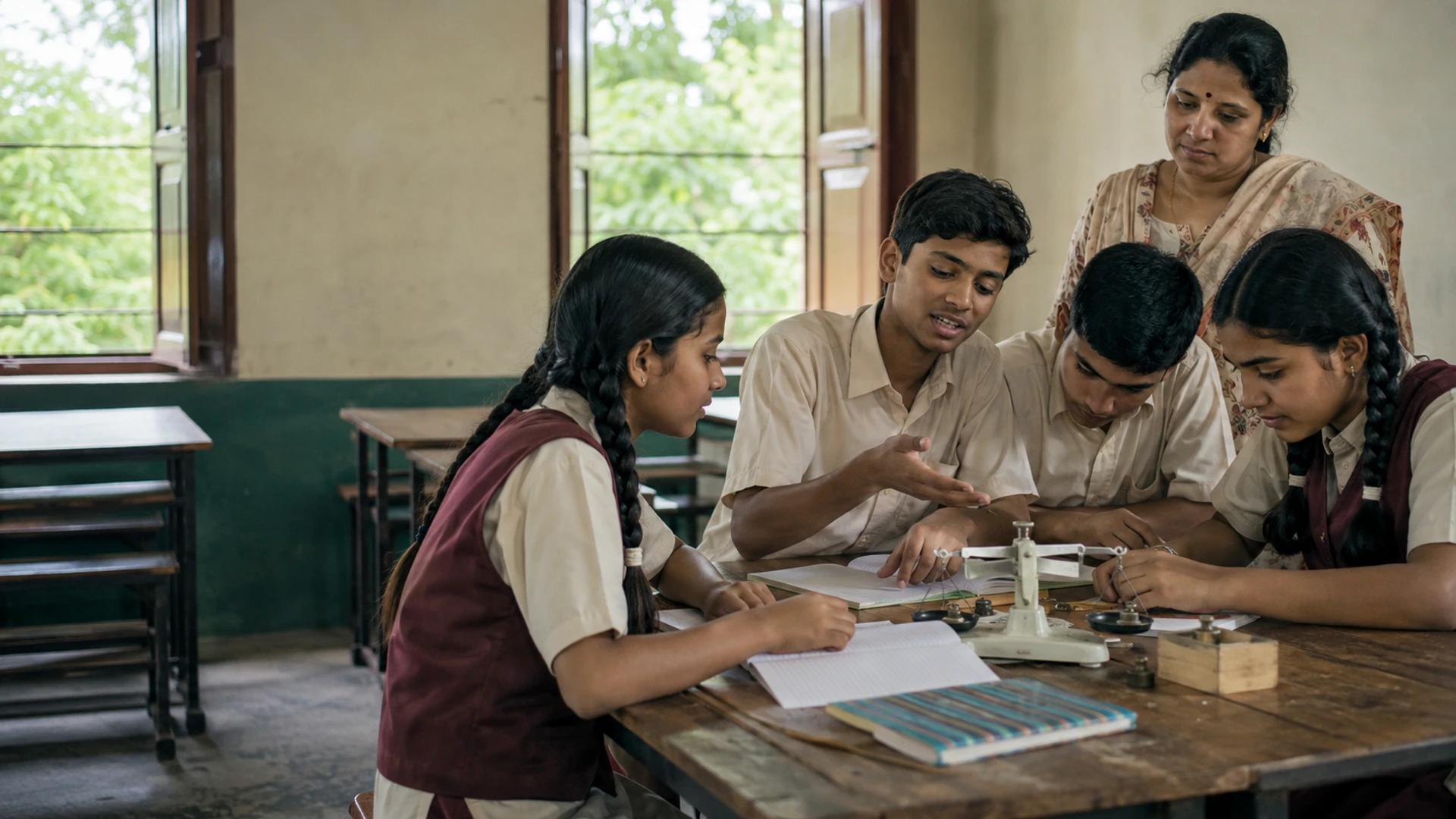
Technology should enter a lesson because it improves the learning task, not because a screen makes the room appear modern. A simulation may make an invisible scientific process easier to understand. A shared document may help students revise together. Neither use removes the need to read closely, write independently, handle real materials, or speak with another person.
For residential schools, the duty is especially continuous because evening study, recreation, sleep, and peer life occur within one community. Device rules need to be understood by students, families, teachers, and residential staff, with predictable exceptions for learning and family communication.
Notice when a reset is needed
Warning signs can include repeated sleep loss, falling concentration, abandoning offline interests, secrecy that feels driven by fear, distress after online activity, escalating conflict over access, or schoolwork that the student cannot explain. None of these proves a single cause. They do justify a calm conversation and, where needed, support from the school counsellor or an appropriate health professional.
Begin with curiosity: what is the student doing online, what need does it meet, and what is becoming harder? A reset may involve a shorter evening window, removing a particularly disruptive app, restoring sport or social time, changing notification settings, or addressing bullying rather than treating every problem as excessive use. The goal is not to win a battle with a device. It is to help a young person regain agency over attention and safety.
Sources and further reading
These sources were checked on 7 September 2026. Rules and circulars can change between academic sessions, so please confirm the latest version for your child’s year.
- Online Safety in Education: 2026 Guidance NoteUNICEF India and UNESCO Regional Office for South Asia
- Cyber Safety: A Handbook for Secondary and Senior Secondary StudentsCentral Board of Secondary Education
- National Curriculum Framework for School Education 2023NCERT and Ministry of Education
- Childhood in a Digital WorldUNICEF Innocenti
More about Radiant Public School
Explore residential life
See how study, sleep, meals, recreation, and pastoral care fit into a complete school day.
Read about education and AI
Consider the knowledge, verification, judgement, and human relationships schools must protect.
Speak with the school
Ask about student devices, online safety, evening routines, and family communication.