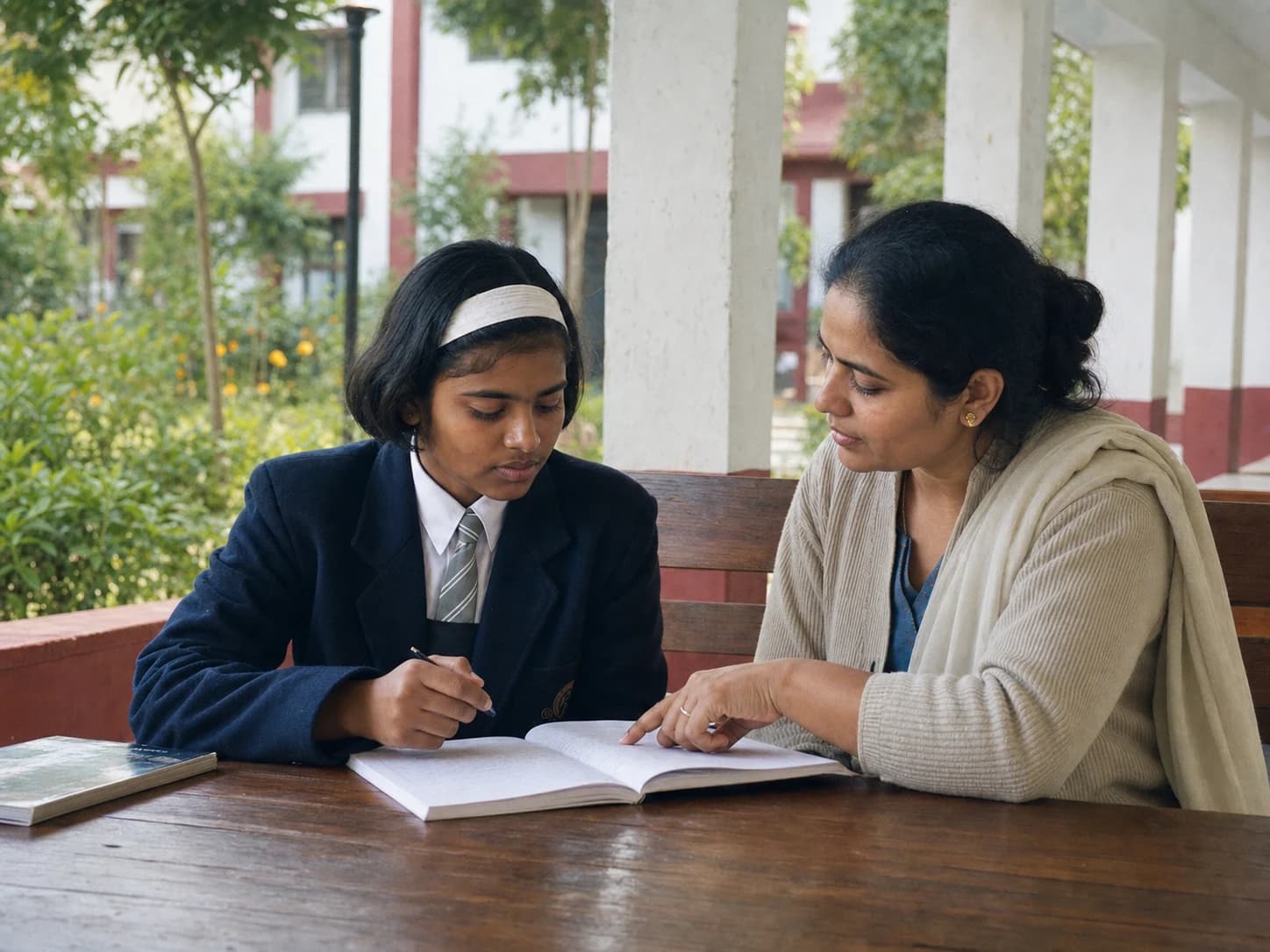
Designing a Better School Day: Balancing Learning, Wellbeing, and Time
A 2026 proposal for a better Indian school day that protects deep learning, movement, meals, feedback, rest, and a humane rhythm for students.
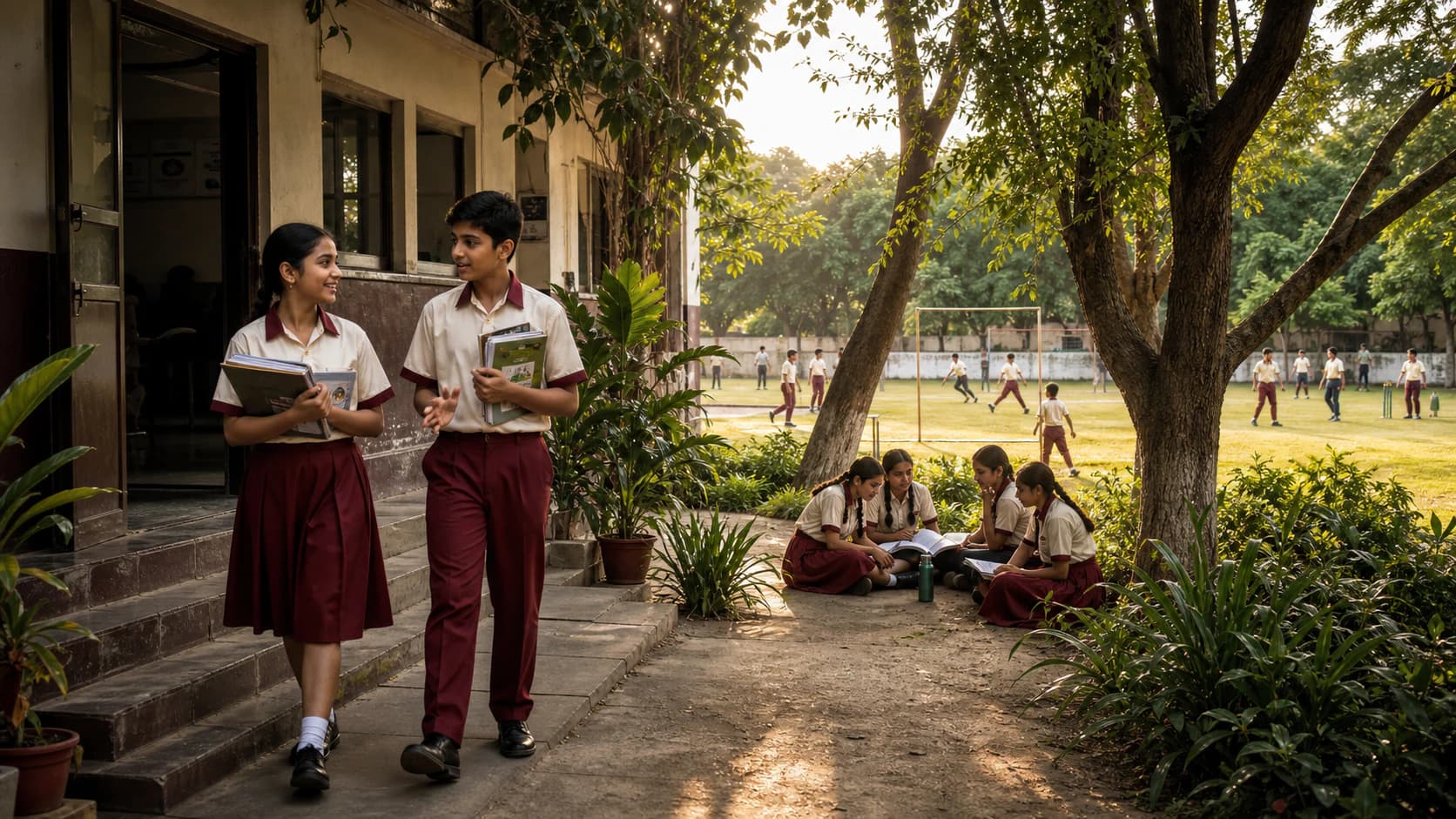
A timetable looks administrative: rows, bells, room numbers, periods. In practice, it is one of a school’s strongest statements about education. It reveals whether difficult subjects receive fresh attention or exhausted attention; whether practical work has enough time to become practical; whether meals are rushed; whether movement is protected; and whether a student ever completes one thought before being sent to the next room.
School-day debates often collapse into a choice between academic rigour and wellbeing. This is a false opposition. A tired student who changes tasks every thirty-five minutes is not experiencing greater rigour. A pleasant day with little sustained intellectual work is not a good education either. The design problem is to create a rhythm in which demanding learning and human recovery support one another.
The 2026–27 CBSE curriculum gives visible space to physical education and wellbeing, art, vocational education, and computational thinking alongside the established academic subjects. The challenge for schools is no longer to mention breadth in a prospectus. It is to make breadth fit inside a finite day without turning every worthwhile activity into another hurried period.
Key takeaways
- A timetable should be judged by the quality of attention it enables, not only by the number of periods it contains.
- Longer blocks suit experiments, writing, projects, and discussion; shorter periods can suit retrieval, languages, and focused instruction.
- Transitions, meals, movement, and unstructured time are not scheduling waste. They affect readiness to learn.
- Homework should complete a deliberate learning cycle, not compensate for an overfilled or fragmented school day.
- Residential schools should design the classroom day and evening study as one system, with sleep and recovery treated as fixed requirements.
The timetable is part of the curriculum
A curriculum lists aims and subjects. A timetable decides what students repeatedly experience. If reading appears only when another activity is cancelled, the school has made a decision about reading. If physical education is the first period surrendered before examinations, the school has made a decision about physical education, regardless of the official document.
Time allocation also shapes teaching. A forty-minute science period encourages a different lesson from a ninety-minute laboratory block. Neither is always better. Clear explanation and retrieval can fit a compact period; setting up an experiment, observing carefully, cleaning equipment, and discussing an unexpected result cannot be compressed indefinitely.
The first design question should therefore be educational: what kind of work does each subject require? Only then should rooms, staffing, and bell times be arranged. Timetables inevitably involve constraints, but educational purpose should be visible inside the compromise.
Protect the rhythm of attention
Students do not bring the same attention to every hour. Younger children need frequent shifts and movement. Adolescents can sustain longer concentration but also face sleep changes, travel, and heavy workloads. Placing every demanding subject in an identical sequence ignores these differences.
Schools can alternate modes: concentrated explanation, individual practice, discussion, making, movement, and reflection. The change of mode matters more than constant entertainment. A quiet reading period can restore attention after a noisy collaborative task; outdoor activity can prepare students to return to seated work.
Transitions need enough time to be real. When a bell ends one subject and the next begins instantly across campus, the delay is simply taken from learning or from the student’s body. A timetable that appears efficient on paper may be built on daily rushing.
Give difficult work enough uninterrupted time
Writing a thoughtful paragraph requires reading the question, finding evidence, composing, noticing a weakness, and revising. An experiment requires preparation and cleanup. A seminar requires students to hear one another before the teacher concludes. These forms of learning improve when the schedule sometimes permits a longer arc.
This does not require every subject to become a double period. A mixed model can preserve frequent contact for languages and mathematics while creating planned blocks for laboratories, art, projects, vocational work, and extended writing. The important principle is that period length should follow the task.
Longer blocks also demand better teaching design. Ninety minutes of uninterrupted lecture is not depth. Teachers need structures within the block: a concise explanation, a question worth working on, individual or group effort, feedback, and a final synthesis that helps students see what changed in their understanding.
Movement, meals, and pause belong inside the design
A lunch break is not successful merely because food is served. Students need time to reach the dining space, wash, eat without haste, and return. A physical-education period is not protected if changing and travel consume half of it. Small operational details determine whether the stated timetable is the lived timetable.
Unstructured time has a role too. It lets students speak with friends, approach a teacher, visit the library, organise materials, or simply stop receiving instructions. In a highly supervised environment, especially a residential school, every minute can easily become programmed. That can produce order while weakening independence.
CBSE’s parenting guidance for 2026–27 includes outdoor learning, sport, mindful connection, and digital-detox activities among its suggestions. Schools should avoid turning these into occasional wellbeing events. The more durable approach is to protect ordinary weekly time in which movement and human contact already occur.
Connect homework, evening study, and sleep
Homework should have a reason that a teacher can state: retrieve an idea, complete deliberate practice, read in preparation, revise a draft, or gather an observation. When every subject assigns work independently, the total can exceed what any teacher intended. Coordination is part of curriculum design.
In a residential school, the opportunity is greater because evening study can be supervised and connected with the academic day. It is also easier to overfill. The same institution controls lessons, activities, prep, meals, and bedtime; it should be able to see the total demand on a child rather than treating each segment separately.
Sleep must be designed backwards from wake-up time. A nominal lights-out rule is not enough if older students routinely need another hour to finish assigned work. When the schedule depends on chronic lateness, the plan, rather than the child, requires correction.
Questions to ask
- How much independent work does each year group receive across all subjects in a normal week?
- Which activities require longer blocks, and are those blocks actually protected?
- How much transition time is lost between rooms, meals, and changing?
- Where can a student seek help without sacrificing the only break?
- Does the timetable permit the stated bedtime after realistic homework?
What a better school day could look like
A better day might begin with a calm arrival and short advisory period rather than immediate administrative noise. The morning could hold two substantial academic blocks with a real break between them. Late morning might combine a shorter subject period with laboratory, studio, or vocational work. Lunch would include the time required to eat. The afternoon could move toward seminar, language, sport, art, guided study, or clubs rather than asking students for six identical hours of seated attention.
The exact design will differ by age, climate, transport, campus, and staffing. There is no universal template. A school in a dense city and a residential campus in Raipur solve different operational problems. The common test is whether each part of the day has a clear purpose and whether the total is sustainable.
Schools should review the timetable with evidence after implementation: late arrivals by period, student and teacher fatigue, missed meals, homework completion, use of the library and sports spaces, learning data, and student feedback. Timetable design is not finished when the spreadsheet balances. It is finished only when the day works for the people living inside it. It must then be reviewed again.
Official sources and further reading
Policy information can change between academic sessions. These first-party sources were checked on 8 August 2026; families should confirm the latest circular for their own session.
Continue exploring the school behind the guide.
Read the full series
Explore the complete 2024–2026 editorial series on the future of schooling in India.
See residential life
Explore how learning, meals, study, sport, pastoral care, and shared life meet on one campus.
Plan a working-day visit
Ask to see the current timetable and the ordinary transitions that make it work.