
CBSE’s 75% Attendance Rule: What JEE and NEET Families Must Know
A parent guide to CBSE’s 75% attendance requirement, documented leave, dummy-school risk, condonation rules, and balancing school with JEE or NEET preparation.
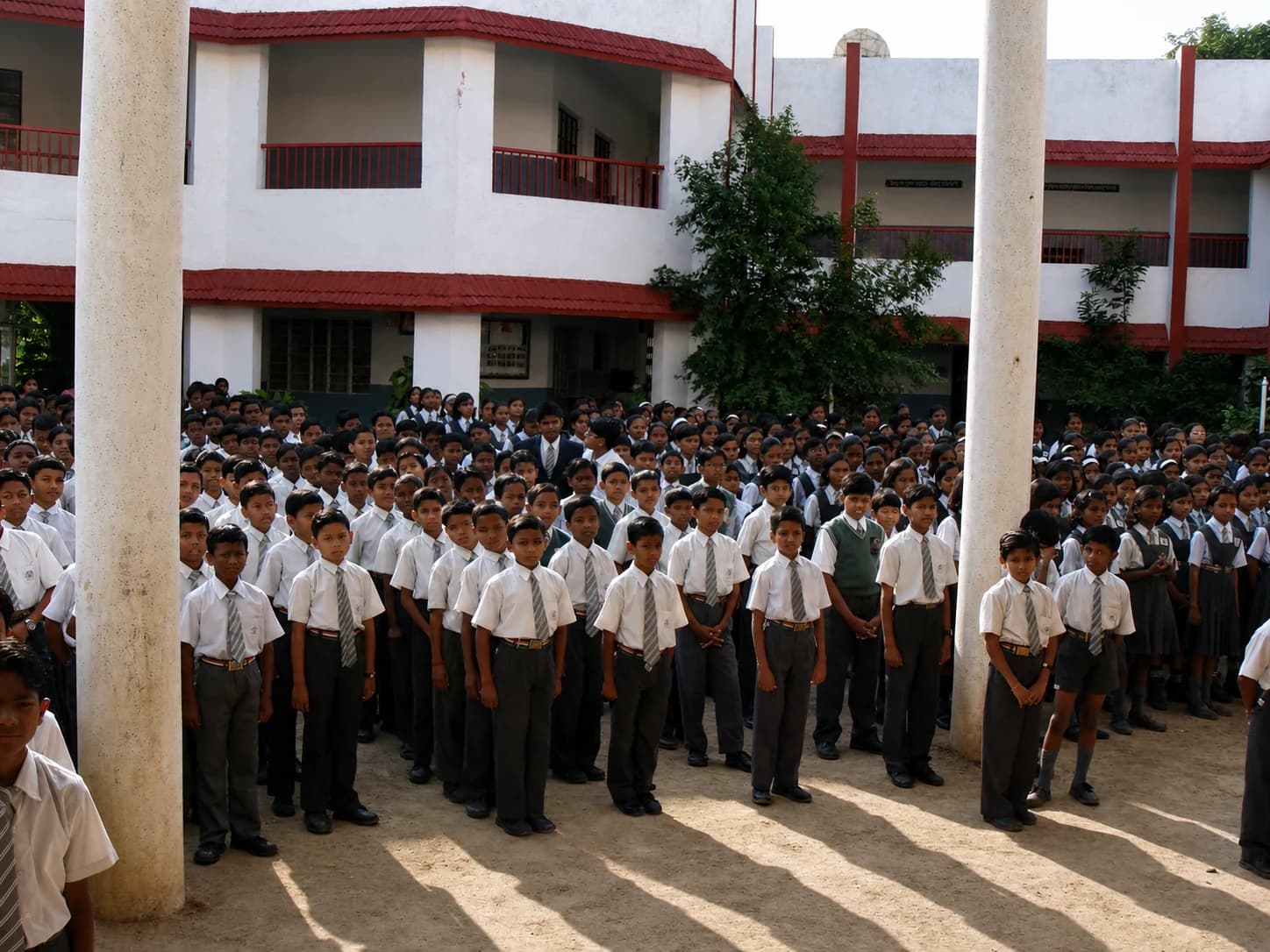
For families planning JEE or NEET preparation, the phrase “dummy school” can sound like a convenient timetable solution: enrol in a school, attend coaching elsewhere, and appear only when examinations require it. CBSE’s current attendance directions make that assumption risky for both the student and the school.
CBSE reiterated that a minimum of 75 percent attendance is mandatory for eligibility to appear in the Class 10 and Class 12 Board Examinations. The Board also directed schools to maintain daily records, document leave, inform parents about shortages, and remain prepared for surprise inspections. Regular school and competitive-exam preparation therefore need to be planned as one workable week.
Key takeaways
- CBSE requires at least 75% attendance for Class 10 and Class 12 Board Examination eligibility.
- Medical or other leave should be requested in writing with supporting documents when the absence occurs.
- Undocumented absence discovered during an inspection may be treated as evidence of a non-attending or dummy candidate.
- Condonation is for documented exceptional circumstances, not a routine substitute for attendance.
- Families should compare the full school-plus-coaching timetable before admission, not after attendance becomes a problem.
What exactly is the CBSE attendance rule?
CBSE’s August 2025 circular reiterates Rules 13 and 14 of the Examination Bye-Laws: students need a minimum of 75 percent attendance to be eligible for the Class 10 or Class 12 Board Examinations. The requirement applies to regular candidates and is not cancelled by enrolment in an external coaching programme.
The Board places responsibility on schools to explain the requirement at the beginning of the session, monitor attendance, update records daily, and warn families in writing when a student is falling short. Parents should therefore expect attendance communication before the examination year is nearly over.
Attendance is not merely a percentage entered at the end of the year. It is supported by registers, leave applications, medical records, school communication, and, where necessary, documentation submitted for condonation of a shortage.
Why documented leave matters
If a student is absent for medical reasons, the family should submit a written leave request and valid medical documentation promptly. For other serious reasons, the absence should still be communicated in writing with the supporting information requested by the school.
The CBSE circular states that leave without a written request may be considered unauthorised absence. During a surprise inspection, students who are absent without proper leave records may be presumed not to be attending regularly and may be treated as non-attending or dummy candidates.
Keep copies of applications, certificates, reports, and school acknowledgements. Waiting until January to reconstruct months of undocumented absence creates unnecessary risk and may leave the school unable to recommend the case properly.
Questions to ask
- Submit leave in the school’s required written format.
- Attach medical or official supporting documents at the time of absence.
- Keep copies and proof that the school received them.
- Review the student’s recorded attendance periodically rather than relying on an estimate.
Can a shortage of attendance be condoned?
CBSE provides a process for considering shortages caused by exceptional circumstances such as prolonged illness, a serious family event, or authorised participation in specified national or international sports. Consideration requires the prescribed documents and the school’s recommendation; it is not automatic.
The published procedure says attendance is calculated as of 1 January and shortage cases must reach the concerned Regional Office by the specified early-January deadline. Families should confirm current dates with the school because a late request or incomplete evidence may be rejected.
Coaching load by itself should not be treated as an exceptional circumstance. A plan that assumes condonation will solve routine non-attendance misunderstands the purpose of the provision and puts the student’s Board Examination eligibility at risk.
What is the risk in a dummy-school arrangement?
A non-attending arrangement separates formal school enrolment from the student’s real place of learning. That can create problems with attendance, practicals, internal assessments, projects, laboratory work, registration data, and the school’s ability to certify that the candidate is regular and eligible.
CBSE’s Affiliation Bye-Laws state that an affiliated school must not present candidates who are on its roll but have not attended regularly or do not meet minimum attendance. The Board may inspect records, and irregularities can affect the school as well as the student.
Parents should be cautious of verbal assurances that attendance will be “managed”. Ask for the official policy, the weekly timetable, internal-assessment requirements, and a written explanation of how school attendance and external preparation will coexist.
How to balance regular school with JEE or NEET preparation
Begin with a seven-day time budget. Include travel, classes, supervised study, assignments, practical work, meals, exercise, and at least a realistic sleep window. If the combined plan fits only by removing sleep or school attendance, it is not a sustainable plan.
Look for coordination rather than duplication. A school with structured study periods, accessible subject teachers, laboratories, and a sensible assessment calendar may reduce the need for scattered extra classes. External coaching, where chosen, should address a defined need rather than consume every non-school hour.
A residential model can simplify travel and create predictable study time, but parents should still examine the exact senior-school timetable and coaching arrangement. “Integrated” is useful only when academic responsibilities are clear and students retain time for health and recovery.
Questions to ask
- Map the weekly schedule before accepting both school and coaching places.
- Confirm attendance, practical, project, and internal-assessment obligations.
- Ask who monitors overload and whom the student can approach for help.
- Protect sleep and at least some regular physical activity.
Questions to ask before Class 11 admission
Ask the school for its attendance policy, the method used to share attendance with parents, the daily and weekly timetable, the academic calendar, and the process for documenting leave. A reliable school should be comfortable giving specific answers.
If competitive preparation is important, ask which support happens during the school day, which is optional, what is provided by outside organisations, and how fees are separated. Also ask how the school responds when a student’s performance falls despite a very heavy schedule.
Rules can be updated. Before making a decision, verify the latest CBSE circulars and discuss the student’s circumstances directly with the school. Do not rely on a coaching representative or informal online post to interpret Board Examination eligibility.
Official sources and further reading
Policy information can change between academic sessions. These first-party sources were checked on 8 August 2026; families should confirm the latest circular for their own session.
Continue exploring the school behind the guide.
Evaluate Classes IX–XII
Compare teaching, study support, board preparation, wellbeing, and career guidance.
Review Radiant academics
See the current class bands, academic routines, laboratories, and support environment.
Ask about senior admission
Discuss attendance, the school timetable, and current senior-school arrangements directly.